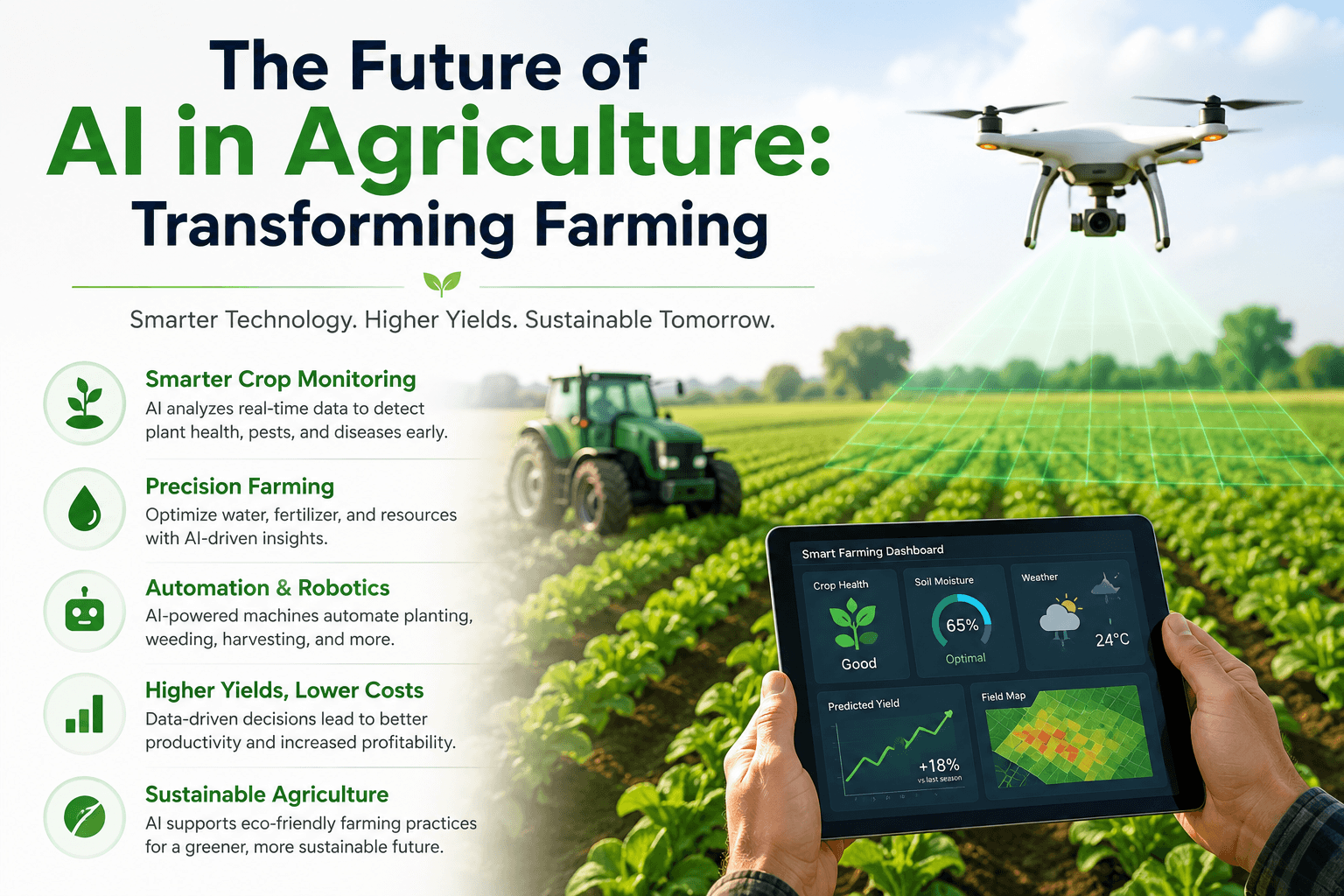
The Future of AI in Agriculture: Transforming Farming
Key Takeaways
- AI robot farming is set to increase agricultural efficiency and sustainability.
- By 2027, AI technologies could reduce labor costs in farming by up to 30%.
- Integration of AI in agriculture can lead to higher yields and reduced environmental impact.
Introduction
In 2026, the agricultural landscape is undergoing a remarkable transformation, driven by advancements in artificial intelligence (AI) and robotics. AI robot farming is becoming an integral part of modern agricultural practices, enhancing productivity, efficiency, and sustainability. This guide explores the future of AI in agriculture, focusing on how AI robot farming is revolutionizing food production.
What You'll Learn
- The role of AI in modern agriculture.
- Technologies involved in AI robot farming.
- Benefits and challenges of implementing AI in agriculture.
- Real-world examples of AI applications in farming.
- Future trends in agricultural AI technology.
The Role of AI in Modern Agriculture
AI is increasingly incorporated into various agricultural processes, from planting and harvesting to monitoring crop health and managing resources. By using machine learning algorithms and data analytics, farmers can make informed decisions that lead to greater efficiency. In 2026, AI technologies such as drones, autonomous tractors, and smart sensors are becoming commonplace on farms worldwide.
Technologies Involved in AI Robot Farming
Several key technologies are driving the AI revolution in agriculture:
- Robotic Harvesters: These autonomous machines are capable of picking crops without human intervention.
- Drones: Used for aerial imagery and crop monitoring, drones help farmers assess crop health and optimize yields.
- IoT Sensors: Internet of Things (IoT) devices collect real-time data on soil conditions, weather, and crop health.
- Machine Learning: Algorithms analyze data to predict outcomes and recommend actions to improve crop production.
Benefits of AI in Agriculture
Implementing AI technologies in agriculture offers numerous advantages:
- Increased Efficiency: AI can automate repetitive tasks, allowing farmers to focus on strategic decisions.
- Cost Reduction: By optimizing resources, AI can reduce labor costs significantly. Studies suggest that by 2027, AI could cut these costs by as much as 30%.
- Higher Yields: Data-driven insights lead to better crop management, resulting in increased production rates.
- Sustainability: AI can help minimize environmental impact by optimizing water usage and reducing pesticide application.
Challenges of AI in Agriculture
While the advantages are significant, several challenges must be addressed:
- High Initial Costs: The initial investment in AI technologies can be substantial, which may deter small-scale farmers.
- Technical Expertise: Farmers may require training to effectively use AI tools and interpret data.
- Data Privacy: Concerns regarding data ownership and privacy need to be addressed as more data is collected.
Real-World Examples of AI Applications in Farming
Several innovative companies are paving the way for AI in agriculture:
- Blue River Technology: Their robot, See & Spray, uses computer vision to identify and manage weeds with precision.
- John Deere: The company is developing autonomous tractors that can operate without human intervention.
- AgEagle: They use drones for crop monitoring, providing farmers with actionable insights to improve yields.
Future Trends in Agricultural AI Technology
Looking ahead, several trends are set to shape the future of AI in agriculture:
- Integration with Blockchain: Enhanced traceability and transparency in the supply chain will be achieved by combining AI with blockchain technology.
- Personalized Farming: AI will enable farmers to tailor their practices to specific crop needs, leading to optimized production.
- Global Collaboration: As AI technologies evolve, international partnerships will facilitate the sharing of best practices and innovations.
Next Steps
As AI continues to reshape agriculture, farmers and stakeholders should consider the following actions:
- Invest in training programs to enhance technical skills.
- Explore partnerships with technology providers for access to cutting-edge tools.
- Stay informed about trends and innovations in AI agriculture.
Conclusion
In 2026, AI robot farming is not just a futuristic concept; it is a reality that is transforming food production worldwide. By embracing AI technologies, the agricultural sector can enhance efficiency, reduce costs, and promote sustainability. As we look to the future, the potential for AI in agriculture is boundless, paving the way for a more secure and productive food system.
People Also Ask
What is AI robot farming?
AI robot farming involves the use of artificial intelligence and robotics to automate agricultural tasks such as planting, monitoring, and harvesting crops.
How does AI improve crop yields?
AI improves crop yields by providing data-driven insights that help farmers optimize their farming practices, such as resource allocation and pest management.
What are the benefits of AI in agriculture?
The benefits of AI in agriculture include increased efficiency, cost reduction, higher yields, and improved sustainability.
What challenges does AI face in agriculture?
Challenges include high initial costs, the need for technical expertise, and concerns about data privacy.
What is the future of AI in agriculture?
The future of AI in agriculture includes trends such as the integration of blockchain, personalized farming, and increased global collaboration.
Frequently Asked Questions
What is AI robot farming?
How does AI improve crop yields?
What are the benefits of AI in agriculture?
What challenges does AI face in agriculture?
Stay Updated
Get the latest posts delivered to your inbox.
Related Posts
The Future of AI Technology: Innovations to Watch in 2026
Explore the innovations and trends in AI technology set to shape 2026. Discover key advancements and their impact...
 Technology
Step-by-Step Guide to AI Testing Careers in 2026
Explore the essential skills and resources for launching a successful career in AI testing in 2026. Your roadmap to...