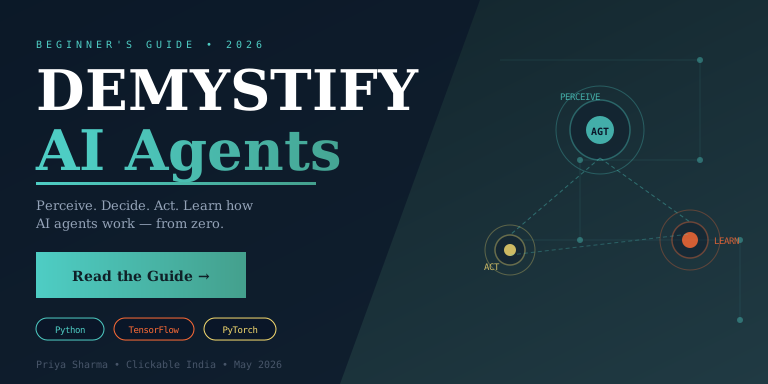
Demystifying AI Agents: A Beginner's Guide
Key Takeaways
- Understand what AI agents are and their functionalities.
- Learn about popular AI agent applications in various sectors.
- Discover steps to implement AI technology in your projects.
What Are AI Agents?
AI agents are software programs that use artificial intelligence to perform tasks autonomously or semi-autonomously. They analyze data, learn from experiences, and adapt their actions based on user interactions or environmental changes. The key characteristics of AI agents include perception, decision-making, and action-taking capabilities.
Why Are AI Agents Important?
AI agents are crucial in today's digital landscape due to their ability to enhance efficiency and productivity across various sectors, including education, healthcare, and finance. By automating repetitive tasks and providing personalized experiences, they allow humans to focus on more complex problems.
How Do AI Agents Work?
AI agents operate through a combination of algorithms, machine learning, and data processing. They gather data from their environment, process it using artificial intelligence models, and make decisions based on pre-defined objectives or learned experiences.
Key Components of AI Agents
- Data Input: AI agents collect data from sensors, user input, or external databases.
- Processing: They analyze this data using algorithms and machine learning techniques.
- Output: Based on the analysis, AI agents take action, which could involve sending notifications, making predictions, or automating tasks.
Types of AI Agents
There are various types of AI agents, including:
- Reactive Agents: These agents respond to specific stimuli but do not have memory or the ability to learn from past experiences.
- Deliberative Agents: They maintain an internal model of the world and can plan their actions based on that model.
- Learning Agents: These agents learn from their experiences and improve their performance over time.
Common Applications of AI Agents
AI agents are being utilized in numerous fields:
- Education: AI tutoring systems provide personalized learning experiences.
- Healthcare: Virtual health assistants help patients manage their medications and appointments.
- Finance: AI agents in trading platforms analyze market trends to make informed investment decisions.
Implementing AI Technology: A Step-by-Step Guide
What You'll Learn
This section outlines the steps to implement AI technology in your projects.
Prerequisites
- Basic understanding of programming concepts
- Familiarity with machine learning principles
Steps to Implement AI Agents
- Define Your Objectives: Identify the specific tasks you want your AI agent to perform.
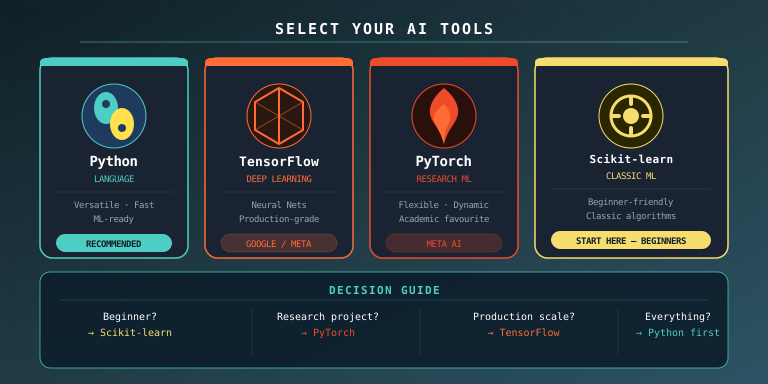
- Select the Right Tools: Choose programming languages and frameworks suitable for AI development, such as Python, TensorFlow, or PyTorch.
- Gather Collect relevant data that your AI agent will use for training and decision-making.
- Build the Model: Develop and train your AI model using the chosen algorithms.
- Test and Validate: Evaluate your model's performance using a separate test dataset.
- Deploy the Agent: Integrate your AI agent into the intended environment, ensuring it operates correctly.
- Monitor and Improve: Continuously track your AI agent's performance and update it with new data for improvement.
from sklearn.model_selection import train_test_split
from sklearn.ensemble import RandomForestClassifier

# Load and split your data
data = ...
X_train, X_test, y_train, y_test = train_test_split(data.features, data.labels, test_size=0.2)

# Train the model
model = RandomForestClassifier()
model.fit(X_train, y_train)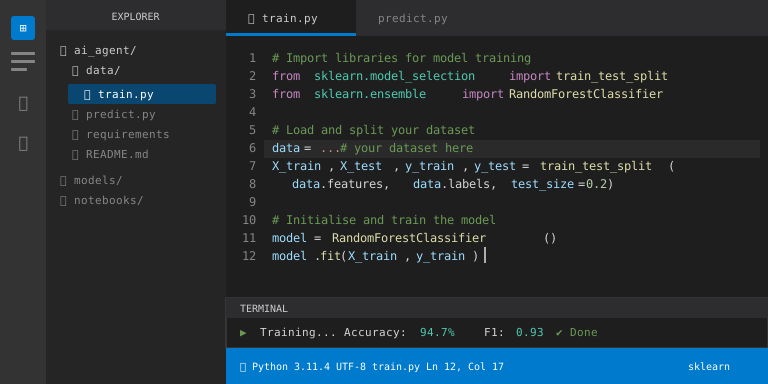
Current Trends in AI Technology
AI technology is rapidly evolving, with recent developments influencing how AI agents are deployed in education:
- Microsoft Copilot: Recently, Microsoft Copilot has raised concerns about data privacy, as it may inadvertently exfiltrate sensitive files.
- AI in Learning: As traditional programming methods decline, AI agents are becoming essential in educational settings.
- Collaborative Learning: New AI technologies, like Gemini embeddings, are enhancing community-driven learning experiences.
Next Steps
To further explore AI agents, consider diving into specific AI frameworks and participating in online communities focused on AI development. Keep up with the latest trends to stay informed about new tools and techniques.
People Also Ask
What is an AI agent?
An AI agent is a software program capable of making decisions and performing tasks autonomously using artificial intelligence.
How do AI agents learn?
AI agents learn through algorithms that analyze data and adapt their actions based on experiences or interactions.
What are the applications of AI agents?
AI agents are applied in areas such as education, healthcare, and finance, enhancing productivity and user experiences.
How can I implement an AI agent?
To implement an AI agent, define your objectives, select appropriate tools, gather data, build and validate your model, and deploy it effectively.
Frequently Asked Questions
What is an AI agent?
How do AI agents learn?
What are the applications of AI agents?
How can I implement an AI agent?
Stay Updated
Get the latest posts delivered to your inbox.
Related Posts
5 Hidden Signs of Dehydration: Identify and Combat It
Learn the 5 hidden signs of dehydration and how to identify and combat them effectively. Stay hydrated for optimal...
 Education
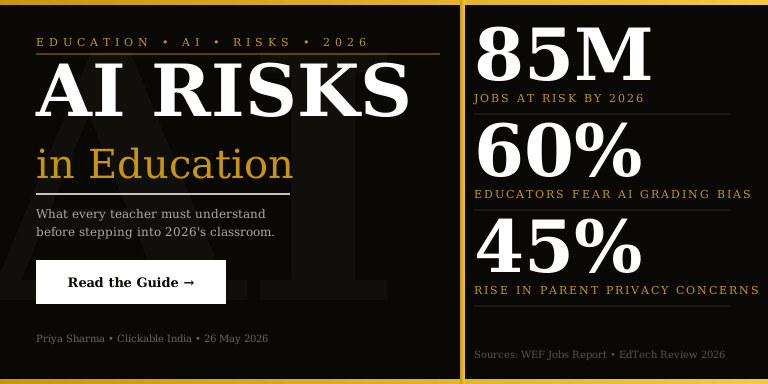
The Most Concerning AI Risks of 2026: What You Need to Know
Discover the top AI risks in 2026 that educators must understand to navigate future challenges effectively.